
AI-based simulation model for optimal placement of micro-hubs and cargo bike pick-upstations

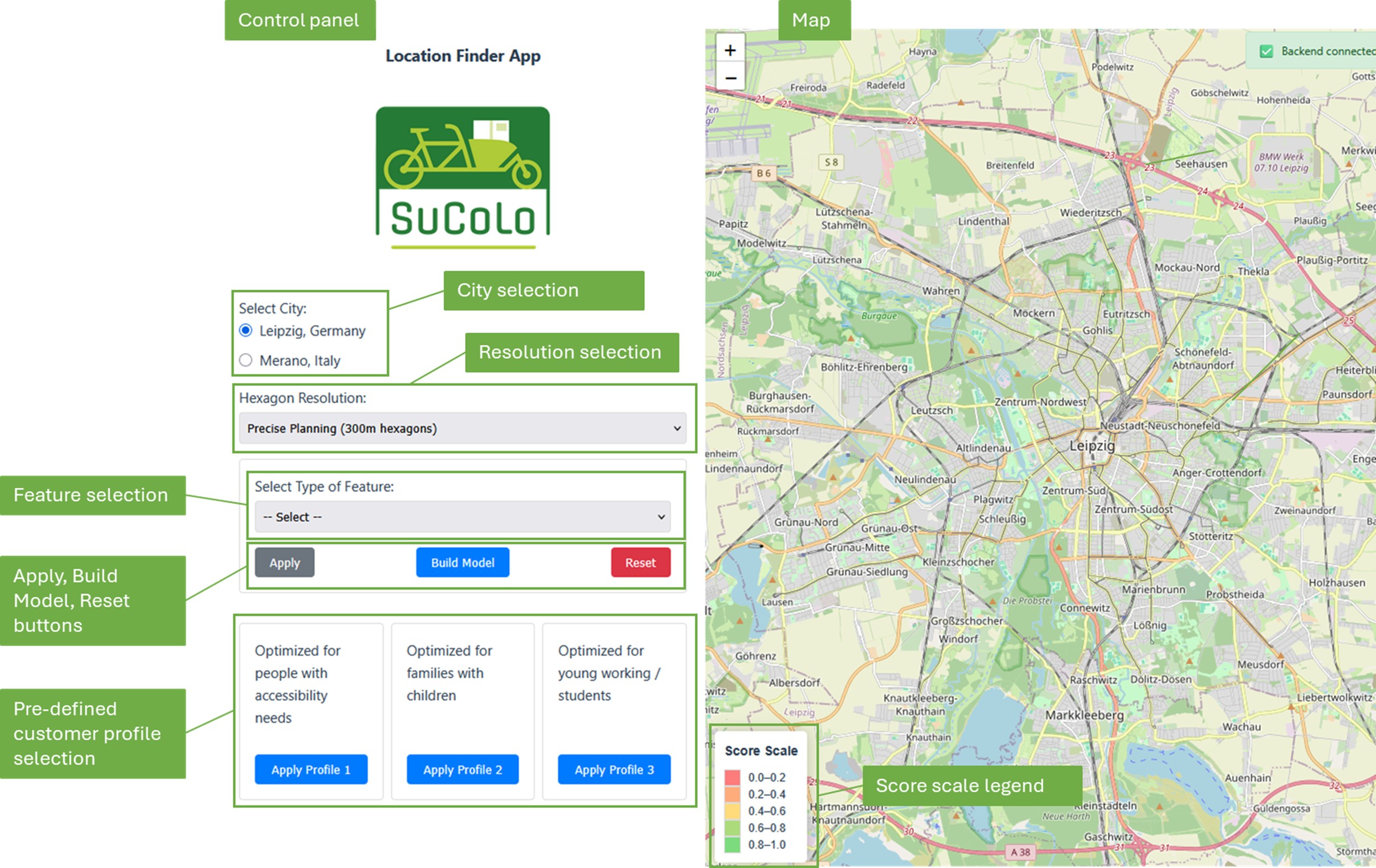
Screenshot of a “Location Finder” app with a control panel on the left (city selection, resolution, feature selection, and action buttons) and a city map of Leipzig on the right. Additional labels explain the functions, and a color scale shows evaluation categories.
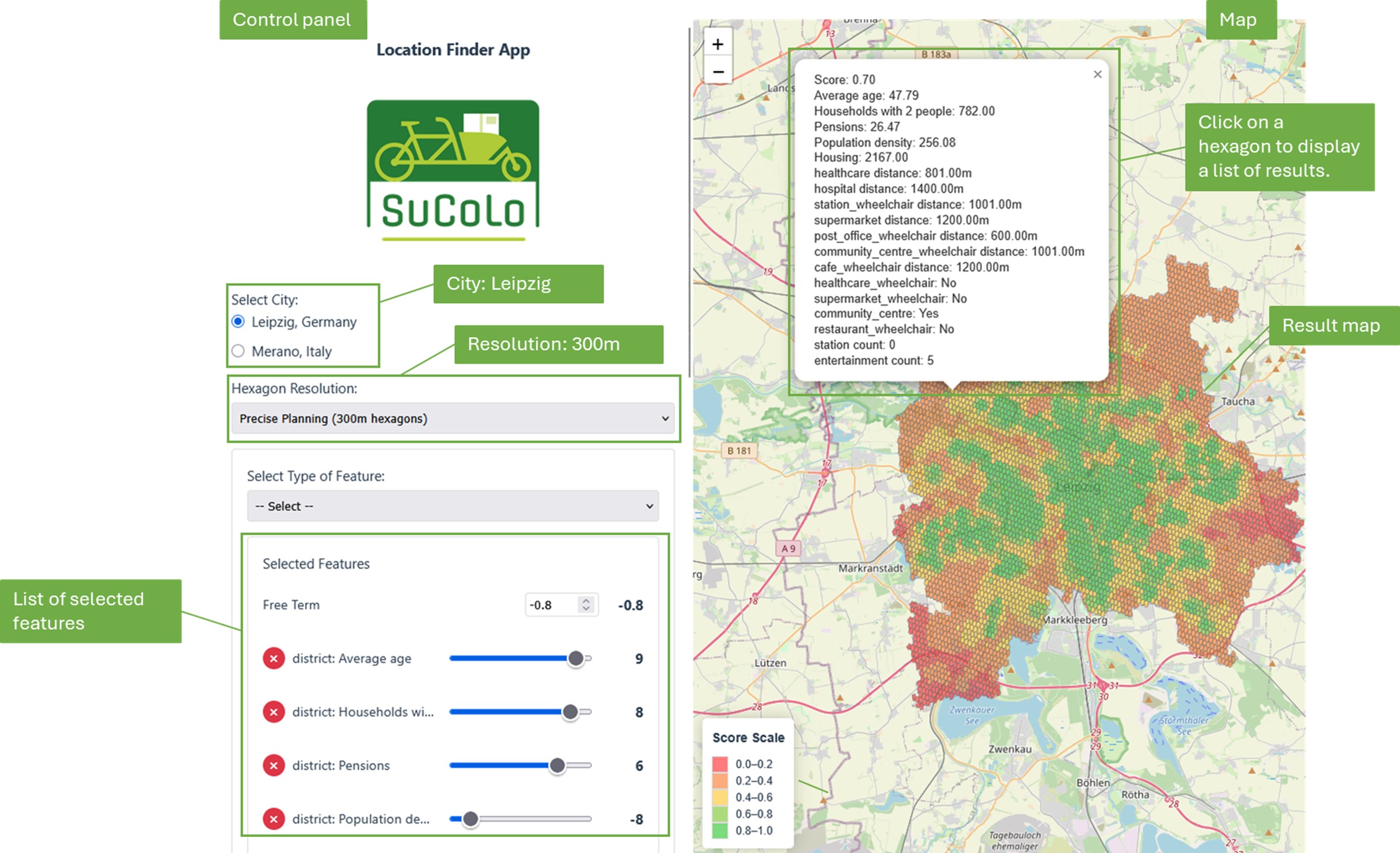
Screenshot of a “Location Finder” app with a control panel on the left and a color-coded result map on the right. The panel shows selected criteria with weights, while a hexagon on the map is selected, displaying detailed location data in a popup.
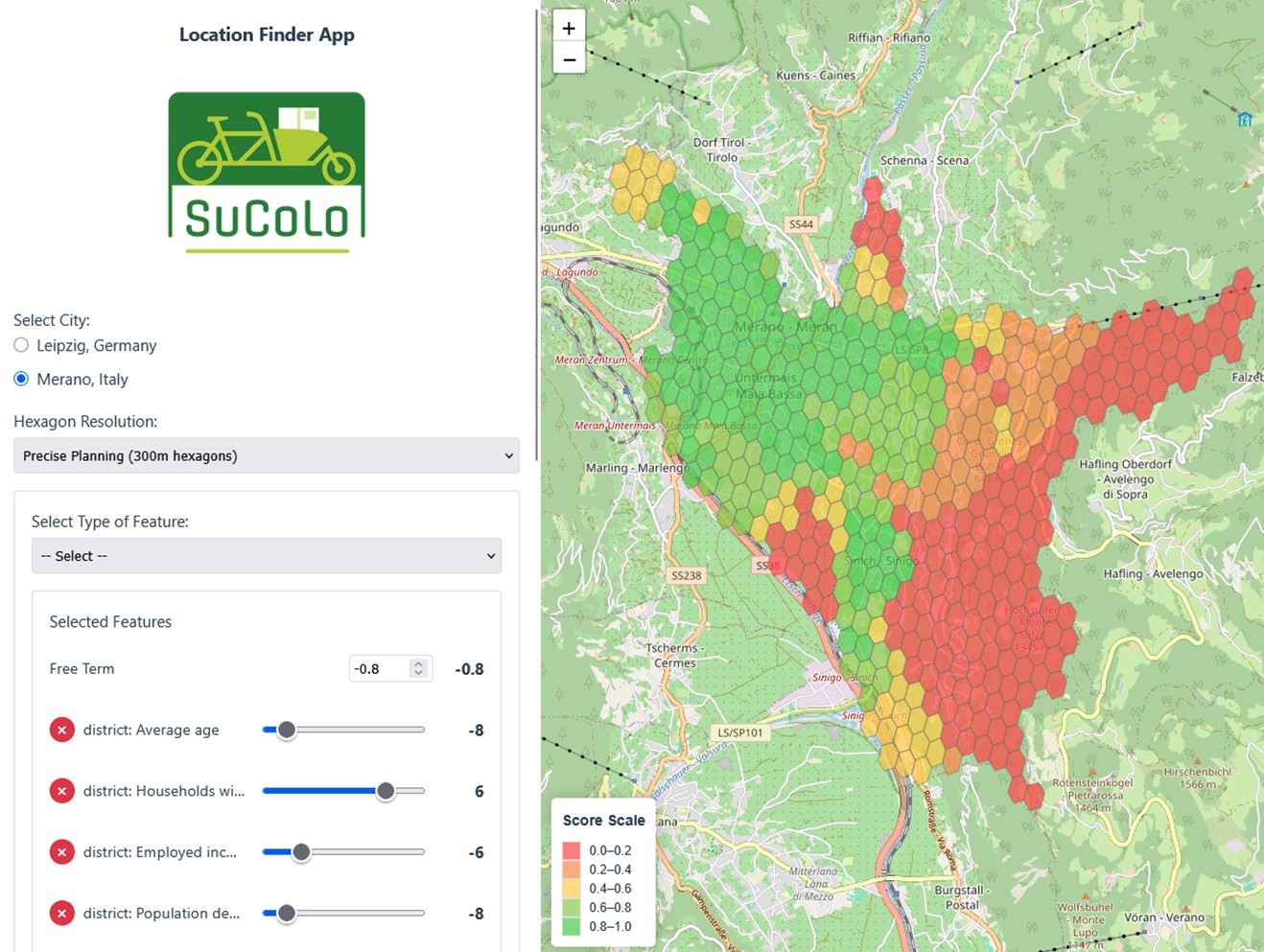
Screenshot of a “Location Finder” app with a selection panel on the left (city of Meran selected, criteria with weights) and a color-coded map on the right using hexagons to show the suitability of different areas.
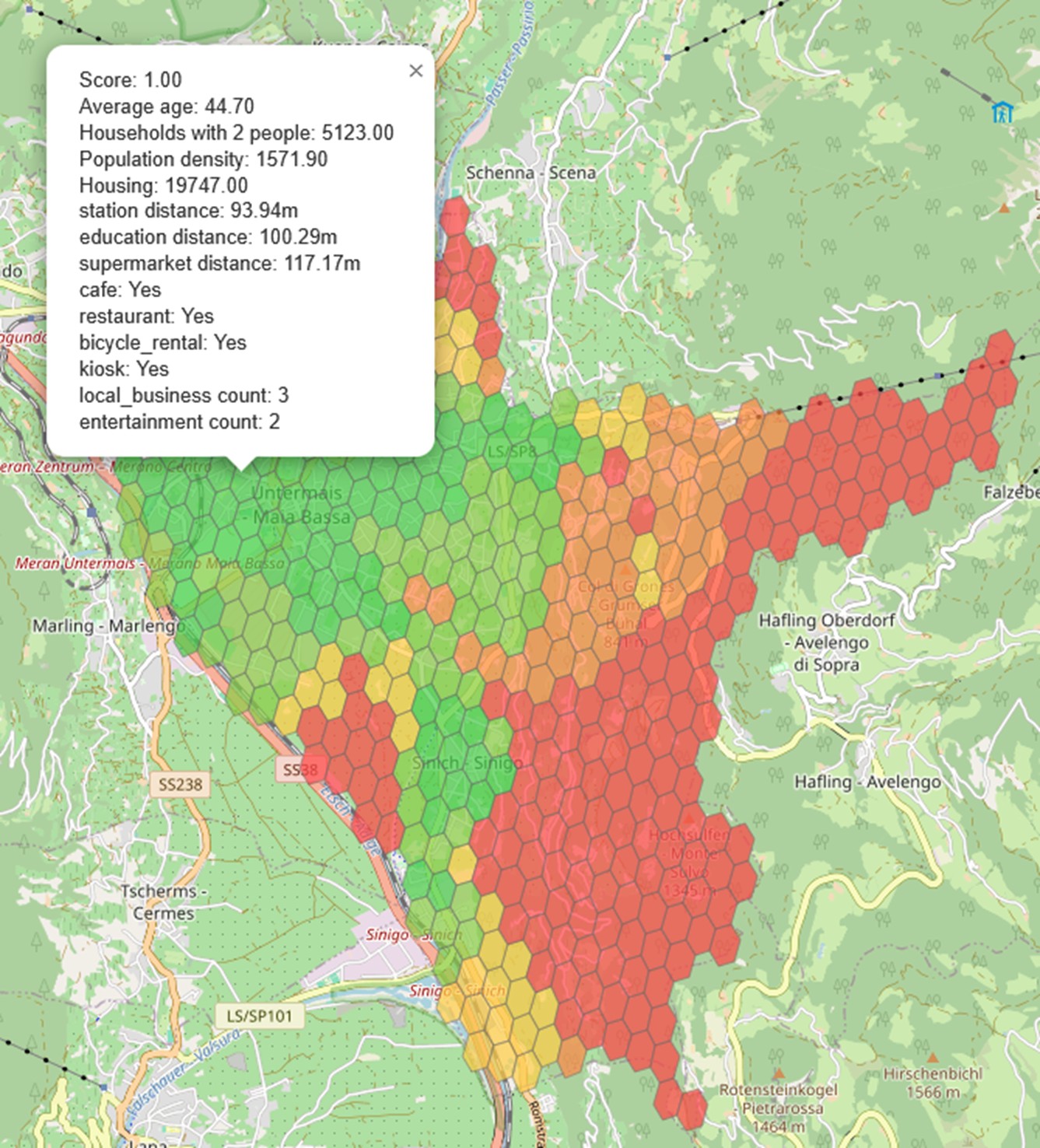
Map section with a color-coded hexagon analysis around Meran. An open popup displays detailed evaluation and location data for a selected area.

Who is the tool for?

Who is it for?

• Urban authorities
• Logistics providers​ 
• Retailers​ 

Type of solution

Type of solution

​​​​​• Software-based
•Infrastructure

Objective 

Objective

​​• Accessibility by design​ 

Maturity level

• Pilot

Why is it used?

  • ​​​​Urban city planning wants to identify potential barrier-free locations in urban outskirts for certain facilities.​ 
  • ​​An urban logistics provider want to identify potential locations for a micro-hub or accessible pick-up station on an outskirt.​ 

How is the tool used by the recipient? 

  • ​​Identifying problems in urban outskirts​ (D2.1, D2.2, D2.3) 
  • ​​Identifying available open data sources​ 
  • ​​Identifying customer needs​ 

Which problem is solved?

The aim is to develop a user-oriented, simulation-based decision support model focusing on sparsely populated areas and accessibility.​ 

Which partners developed the tool?

Leipzig University, Logistics Living Lab​

How was the tool developed

  • ​​​​Identifying problems in urban outskirts​ (D2.1, D2.2, D2.3
  • ​​Identifying available open data sources​ 
  • ​​Identifying customer needs​ 
Scroll to Top